

Solidarity with Lebanon: six years of action tailored to the needs of the local population
Against a backdrop of escalating conflict, Lebanon is currently facing a deeply worrying humanitarian crisis. The bombings and mass displacement of people are exacerbating a situation already marked by years of economic, social and political crisis. Since the explosion at the port of Beirut in 2020, the Fondation de France has been working closely with its partners on the ground to assist the civilian population, particularly the most vulnerable.
The Fondation de France focuses its work on several complementary areas: providing shelter for families, access to essential needs, continuity of education, and psychosocial support.
Supporting the most vulnerable families
Faced with the influx of displaced families, many local associations are stepping up to meet their most urgent needs. The Fondation de France supports several of these organisations.
The association DPNA (Development for People and Nature Association) supports particularly vulnerable groups (children, teenagers, people with disabilities, etc.) in many Lebanese cities. It provides accommodation, psychosocial support and distributes food, water and hygiene kits. A community canteen has also been set up for displaced families staying at the Abra collective centre and in the surrounding neighbourhoods. Nearly 300 hot meals are prepared and served every day. The association also coordinates food aid distributions in collaboration with the local authorities.
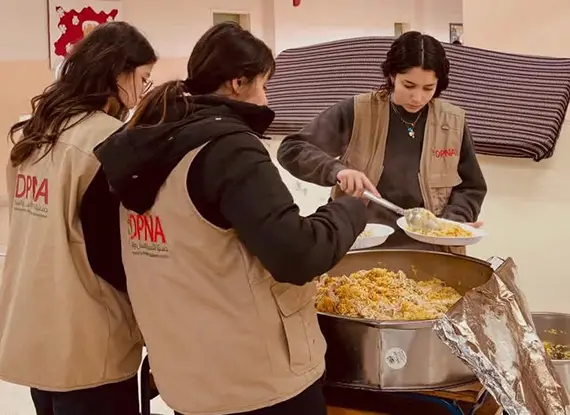 Solidarity with Lebanon: the Fondation de France remains committed to supporting vulnerable communities. ©DPNA
In Beirut, the Jibal association, which supports people living in extremely precarious circumstances, has stepped up its efforts in response to the humanitarian crisis. It coordinates three food aid centres and a shelter for displaced people in the Hamra, Daoura and Achrafieh districts. The association works closely with local farmers to prioritise the purchase of fresh produce and to support Lebanon’s agricultural sector, which is already in a very fragile state. More than 7,600 meals are distributed every week.
Founded during the Lebanese Civil War, the Libami association has been supporting residents of the residential and extremely deprived neighbourhood of Nabaa for nearly forty years. It distributes food aid and medicines, as well as mattresses and blankets, to families taking in displaced relatives. It also serves as a place of refuge for children affected by the war. The association also provides social, psychological and educational support to families and organises educational activities. Nearly 550 families have already received support.
For its part, the Lebanese Centre for Human Rights (CLDH) works with the most isolated and overlooked displaced people, who often live outside collective accommodation centres. Its teams carry out field visits to identify those who are particularly vulnerable: single mothers, elderly people, people with disabilities, and families without financial means. These individuals receive personalised support, including an assessment of their needs, referral to appropriate services and social support. 30 families have received emergency financial assistance to cover their essential expenses: food, temporary accommodation, medication and transport. Legal assistance is also available to those whose rights have been infringed.
Provide psychological support
Beyond material needs, the consequences of the war are taking a heavy toll on the population, particularly children and families. The Fondation de France supports initiatives aimed at providing psychological support, which is essential for alleviating the effects of trauma.
The NGO Arcenciel, which has been active in Lebanon since 1985, provides, for example, psychological support to people in Beirut and the Bekaa Valley in the east of the country. Its teams of mental health specialists work directly with displaced families and host communities to identify cases of psychological distress and refer people to appropriate care. Individual psychotherapy sessions are available for people with mental health issues. The NGO also organises group-based psychosocial activities for children, women and families. Among these, circus workshops run by the Cirquenciel association provide spaces for breathing, expression and social connection in a particularly stressful and uncertain context. More than 150 families benefit from these activities, and 30 receive personalised psychotherapeutic support.