

“The way philanthropy operates is becoming just as important as what it funds” – Maja Spanu
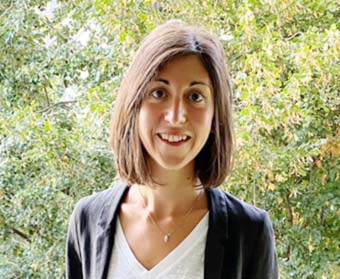 For more than ten years, the Ariadne network (European Funders for Social Change and Human Rights) has been publishing a report focusing on the major challenges facing European foundations working to promote social change and human rights. This 2026 edition marks a turning point: more than just an exercise in forecasting the sector’s future challenges, this report is intended as a strategic planning tool designed to help those involved in philanthropy strengthen their capacity for action in an environment characterised by democratic decline and a shrinking civic space. Interview with Maja Spanu, director of Ariadne.
In this new report, you refer to “strategic orientations” rather than “forecasts”. Why has this change taken place?
Until now, Ariadne's annual “Forecast” had focused primarily on analysing the context and the priorities identified by our members. This year, we wanted to take things a step further. Our aim is to produce a more in-depth analysis of the changes currently taking place and, above all, to draw from this analysis some very practical guidelines for those involved in philanthropy.
We wish to strengthen Ariadne’s role not only as a generator of knowledge but also as a forum for strategic reflection within the sector. This report is the result of a collaborative effort carried out with our members: it draws on workshops held in France, Germany and the United Kingdom, as well as contributions from around 130 stakeholders in the European philanthropy sector.
We have also decided to change the frequency of the report: it will now be published every two years. The guidelines it proposes are designed to be long-term. This new schedule will enable us to continue our dialogue with our members between editions, to enrich our collective thinking and to support the implementation of these guidelines.
The concept of resilience runs throughout the report. Why has it become so important?
In analysing our discussions with the foundations, we realised that even when the word “resilience” was not used, everyone was questioning their ability to continue their work against a backdrop of a shrinking civic space, challenges to the rule of law, wars, disinformation and technological upheavals.
Resilience comes into play on several levels. There is, of course, the resilience of individuals and organisations, but also that of philanthropic ecosystems and, more broadly, democratic resilience. How can we continue to defend fundamental rights when the conditions for doing so are becoming more difficult? In this context, how can we safeguard the capacity of civil society and the philanthropic sector itself to take action?
In fact, I am becoming increasingly cautious when it comes to talking about crises. A crisis is, by definition, a temporary event. However, we are facing far more profound changes. Elections may accelerate certain developments, but the shrinking of civic space and the erosion of the rule of law are part of long-term trends. If we continue to view them as a series of crises, we will remain in a reactive mode. If we recognise that these are structural changes, we will be able to start taking action with a long-term perspective.
What are the main risks identified in connection with the decline of democracy in Europe?
The threats are now widely shared, regardless of the country. We are seeing a rise in anti-democratic rhetoric, increasing restrictions on civil society, and mounting pressure on organisations working in the public interest on issues such as human rights, social justice, migration and gender. For example, between 2019 and 2023, more than 1.18 billion dollars were invested in Europe to support anti-rights and anti-gender movements and initiatives, according to a report by the European Parliamentary Forum on Sexual and Reproductive Rights (EPF). These figures illustrate the growing influence of these networks and the substantial resources available to these organisations.
More broadly, according to the CIVICUS Monitor, only 19 of the 54 countries in the “wider Europe” region currently have a civic space that is considered “open”. This research tool, which provides data on the state of civil society and civil liberties, also highlights the rise of campaigns to delegitimise civil society, as well as the development of disinformation strategies amplified by new technologies.
These pressures obviously affect the voluntary sector, but they also have a direct impact on philanthropy. In Europe and internationally, foundations are subject to increased scrutiny, as well as regulatory and reputational pressures. At Ariadne, we are keeping a very close eye on developments in the United States. Following Donald Trump’s re-election, the philanthropic sector has come under increasing pressure, as demonstrated by the allegationslevelled at the work of the Open Societynetwork of foundations in the United States.
Beyond these acts of intimidation, what concerns us is the atmosphere they create. We are seeing a form of self-censorship emerge, with some foundations reluctant to take a stand on issues that might now be regarded as sensitive, whether they relate to climate change, minority rights or even democracy.
You state in the report that “how philanthropy operates may become as important as what it funds”.
In fact, this year, we have deliberately chosen to focus less on the causes to support and more on the conditions that will enable those working in the public interest to continue their work. Whether we are working on climate change, migration, LGBTQIA+ rights, social justice, anti-racism, digital issues or democracy, those on the ground face the same pressures. We therefore wanted to consider what they will need in the coming years to continue their work, and how foundations can adapt their support accordingly.
The report’s first focus is on what we call resourcing. It is no longer simply a matter of providing funding, but of considering all the resources that organisations need to carry out their work. This may involve legal support to defend oneself against gagging lawsuits, digital security tools, training courses… Some foundations even go so far as to purchase buildings in order to provide safe places where organisations or individuals under threat can meet.
The second focus is to strengthen ecosystems. For a long time, foundations have supported individual projects. However, today’s challenges are interconnected. Whilst individual support is essential, we must also invest in networks and coalitions to increase our impact. The answers will inevitably be collective.
Finally, the third focus concerns narratives. In the face of anti-democratic, anti-rights or anti-gender rhetoric, we must be able to construct positive narratives about the society we wish to build. Foundations can therefore invest more in independent media, media and information literacy, and the ethical use of artificial intelligence, with a view to strengthening, in particular, citizens’ ability to tackle disinformation.
This new report also shows that foundations are increasingly being prompted to reflect on their commitment against a backdrop of growing social division. Can we still claim some form of neutrality?
In my view, neutrality never exists entirely. Once you choose to support one cause rather than another, you are making a choice. The question is rather how to fulfil this role whilst remaining non-partisan. Philanthropy is not just about distributing funds. It helps to create the conditions in which fundamental rights, democracy and civil society can continue to exist.
The situation obviously varies greatly from country to country. Supporting LGBTQIA+ rights in France does not carry the same risks as, for example, in Georgia or in other contexts where freedoms are under greater threat. But everywhere, foundations must now give more explicit consideration to their ability to operate in an environment where political and legal pressures are mounting.
Do French foundations face any specific challenges?
A number of concerns have emerged very clearly from the discussions held in France. The first concerns the very definition of the public interest. Many actors and actresses involved in philanthropy are wondering how this concept might evolve in a more repressive political climate, and what consequences this might have for those working in the public interest on human rights or social change.
We are also seeing growing concern about the way philanthropy is viewed. The recent work of the Senate Inquiry Committee has raised questions about the place and role of foundations in public debate. There is also the issue of perception and trust. How can we move beyond the many clichés that still exist about the role of philanthropy? It is therefore particularly important to explain that philanthropy does not operate behind closed doors and that progressive philanthropy does exist.
Finally, there is a great deal of debate in France about the social contract. How can we rebuild a sense of solidarity in an increasingly divided society? All these issues are crucial for the years to come.
Despite this worrying assessment, the report remains focused on taking action. What makes you feel optimistic?
Despite the difficulties, those involved in philanthropy remain highly committed to taking action. They are seeking to coordinate their efforts more effectively, share their experiences and work together to develop new solutions. This trend is very encouraging.
We are also seeing young philanthropists and young professionals entering the sector, bringing with them a different perspective on philanthropy and a fresh take on personal and socially responsible engagement – it’s very exciting.
Read the full Ariadne Forecast 2026
TO FIND OUT MORE
→ “We believe that this is a moment for philanthropy to be bold, brave, and courageous.” - Julie Broome
→ Philea Forum 2026: Philanthropy for People and Planet
→ Giving Europe, a unique network promoting cross-border philanthropy across Europe
→ Futures Philanthropy: Anticipation for the Common Good