

Solidarity with Morocco: three years of action
On 8 September 2023, a powerful earthquake struck Morocco, claiming more than 3,000 lives and leaving tens of thousands of people homeless. For more than three years, Fondation de France has been mobilised to support affected populations, particularly the most vulnerable. Of the €11.4 million raised, Fondation de France allocated more than €10.8 million to support 82 initiatives implemented in the disaster-stricken areas of Morocco.
After addressing essential needs in the months immediately following the disaster, Fondation de France is now focusing its support on four priorities: facilitating reconstruction, supporting economic recovery, safeguarding access to education and training, and providing psychological support to local residents.
Key figures as at 5 October 2026
86,000 donations
€11,4 million raised
€10,8 million committed
Supporting reconstruction
Three years after the earthquake, the reconstruction of public infrastructure remains a major challenge. Beyond the restoration of buildings, Fondation de France supports initiatives that help restore access to essential services, preserve local economic resources and recreate spaces for living and gathering for local residents.
In Asalda, in the province of Al Haouz, the Asalda pour l'environnement association is rebuilding a communal hammam and refurbishing its headquarters. In the absence of individual sanitary facilities in homes, the hammam was an essential amenity for the village's inhabitants, particularly women, children and the elderly. Its reconstruction will enable nearly 150 families to regain sustainable access to this sanitation facility, which also serves as a place for meeting and social interaction. At the same time, the refurbishment of the association's headquarters will enable the relaunch of community and educational activities, notably sewing training, craft production workshops and literacy classes for women.
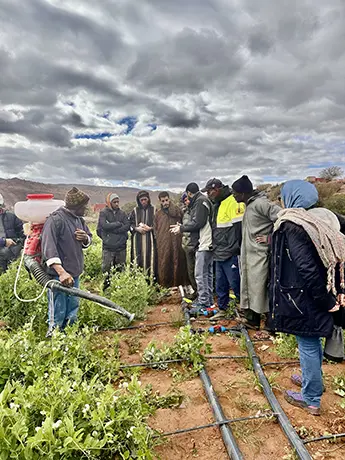
In the commune of Asni, theTifawin pour le développement social association is working to restore agricultural infrastructure damaged by the earthquake: collapsed cultivation terraces, destroyed traditional irrigation channels and damaged wells. In this mountainous region, where more than 90% of the inhabitants depend on agriculture, this destruction has severely disrupted access to water, reduced agricultural production and led to a drop in the inhabitants' incomes. The project, which will benefit 360 people, will restore irrigation systems to enable families to resume farming, preserve agricultural land and limit the risk of plots being abandoned. In addition, training on collective water management and new agricultural practices will be offered to strengthen their capacity to cope with droughts and soil degradation.
Supporting economic recovery
Reconstruction also depends on the resumption of economic activities severely disrupted by the earthquake, particularly in rural areas where agriculture and handicrafts are the main sources of income. Fondation de France supports initiatives that enable local people to regain their livelihoods, strengthen their skills and foster women's economic autonomy.
In Tizagharine, the reconstruction of the community centre, led by the Tinmel pour le développement association, will enable the two women's cooperatives to resume their craft and food-production activities, which were interrupted by the destruction of the building. Sewing, weaving, collective cooking, and the production and marketing of local products: these activities provide significant sources of income for local women. The centre will also host vocational training, literacy classes and entrepreneurship workshops to support women in developing their skills and economic activities. The reopening of a nursery and the resumption of academic support and computer skills classes will also help facilitate their participation in the village's economic and community life.
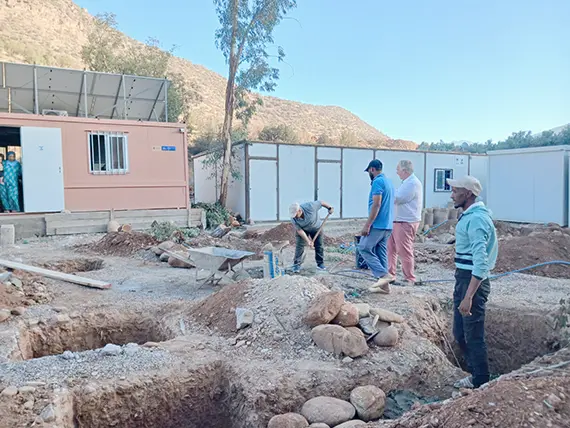
In the province of Taroudant, the association Migrations & Développement coordinates the ADRAR programme, which supports the reconstruction of the area through a comprehensive approach combining economic revitalisation, access to healthcare and education, the rehabilitation of community infrastructure and environmental preservation. To carry out these actions, it brings together local authorities, associations, a university, and businesses in a consortium, working in conjunction with local communities. On the economic aspect, the association is supporting 160 family farms in particular, as they face the consequences of the earthquake as well as drought. It also supports ten entrepreneurs in restarting their businesses and 40 new project leaders, notably through entrepreneurial support and the development of crowdfunding. In the Ouzioua Valley, for example, five initiatives are being supported to develop rural tourism that showcases the landscapes, villages and local expertise. The programme will help improve the living conditions of nearly 1,400 residents of the province.
Preserve access to education
The earthquake has severely undermined access to education in the long term, particularly in the rural areas of the High Atlas, where the destruction of schools compounds the difficulties caused by remoteness and a lack of transport. Fondation de France continues to support initiatives that enable children to regain suitable learning conditions, prevent school dropout and foster their personal development.
In Al Haouz province, the organisation CARE Maroc is continuing its educational recovery programme with the installation of seven new prefabricated classrooms in several primary schools affected by the earthquake. They will make it possible to improve schooling conditions for nearly 500 children aged 6 to 11, half of whom are girls. These pupils are currently studying in overcrowded classrooms that can accommodate up to 50 children on a rotational basis. This project follows on from an initial intervention that enabled the installation of 170 modular classrooms. In addition, CARE Maroc plans extracurricular activities and awareness-raising initiatives focused on inclusion, gender equality and the prevention of gender-based violence. Meetings with parents will also be organised to strengthen the link between families and the school.
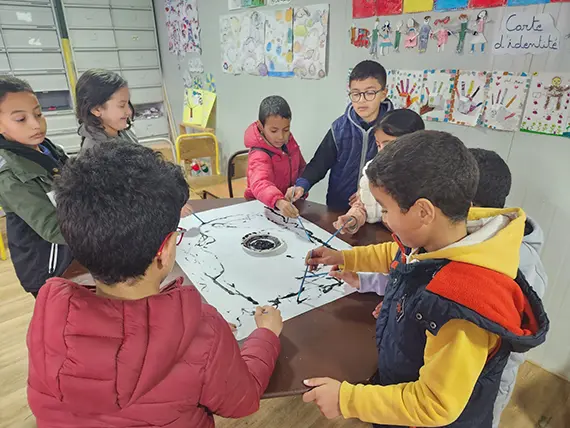
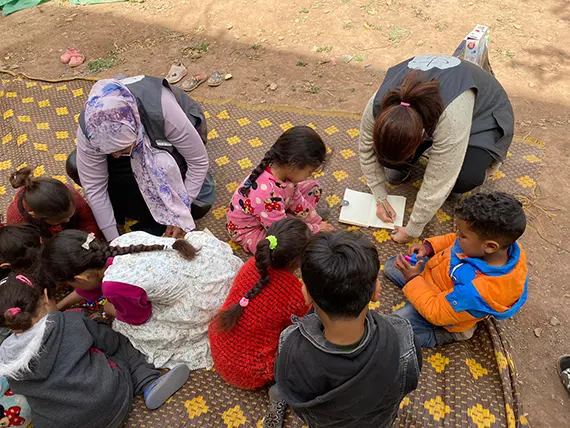
In the Tahnaout region, the Tinmel association is rolling out the Tanouir programme, aimed at pupils in rural public primary schools. Since the earthquake, this programme has supported over 1,200 children across five affected municipalities (Amizmiz, Ourika, Tamesloht, Saada, and Riyad Tioute) by providing spaces for listening, expression and creativity. It aims in particular to address the challenges of school dropout, the psychosocial vulnerabilities of pupils and the lack of teaching tools. Already implemented in an initial rural school, the programme will be extended to a second school with the support of Fondation de France, enabling 200 new pupils to benefit from it. Tinmel also works with the Centre Fiers & Forts, an association dedicated to child protection in Morocco that supports children experiencing trauma or social distress. Tinmel trains the centre’s educators in the Tanouir programme so that they can offer children creative and sporting activities and then run these workshops independently.
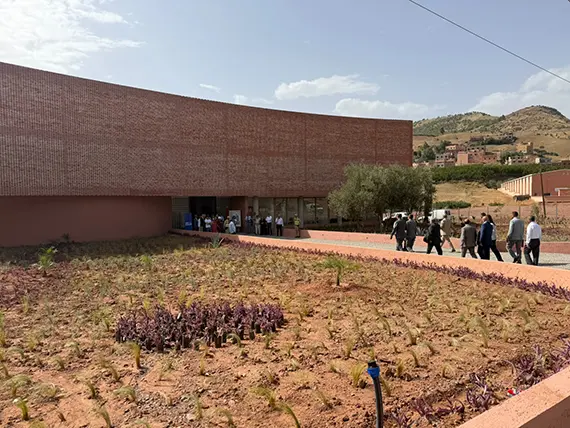
In Asni, the association Amis des Écoles is continuing the reconstruction of two boarding schools for children from remote villages in the High Atlas. These facilities will enable more than 500 young people aged 11 to 18, from the region's most vulnerable families, to continue their education at the middle and secondary schools in Asni. In this mountainous area with limited transport, accommodation is a key factor in sparing pupils long daily commutes, which are often a cause of school drop-out. After supporting the construction of an initial boarding facility for 260 girls—operational since the start of the September 2026 term—Fondation de France is now backing the development of a second building designed to accommodate 250 boys. Both institutions are adapted for students with disabilities.
Provide psychological support
Beyond the material consequences, the earthquake profoundly disrupted the lives of the inhabitants. Three years after the disaster, Fondation de France continues to support initiatives that foster psychological support, the rebuilding of social ties and the resumption of community life.
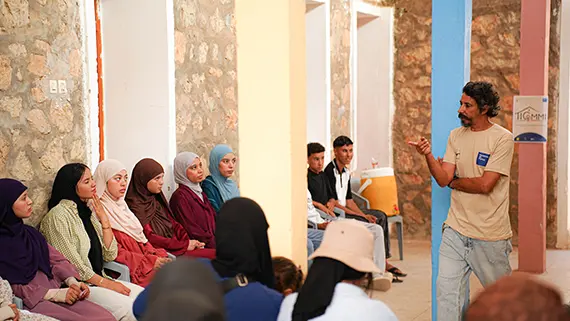
In several rural communes of the High Atlas, the Spect'Act Foundation is deploying Tigmmi, a civic theatre caravan designed to support local populations in their psychosocial recovery. Specialising in the practice of forum theatre, the association invites residents to share their experiences and to dramatise the changes in their daily lives since the earthquake. Initially, accounts from the affected populations will be gathered and will subsequently serve as material for the creation of the performances. During the performances, audience members will be invited to take part in discussions to share their feelings and reflect collectively on the difficulties encountered. The project will mobilise 500 people, while reaching a wider audience through participatory performances. A partnership with the Faculty of Arts and Humanities in Agadir will also make it possible to document these experiences.
Since the earthquake, the association Terra Psy has been supporting populations affected by the disaster, particularly those suffering from post-traumatic stress and anxiety disorders. To ensure the long-term continuity of this support, it established the “Al Mossanada” mental health resource centre in Marrakech. This centre offers, among other things, support groups and trains local stakeholders (teachers, associations, and community contacts) in mental health first aid, enabling them to better identify and support individuals in distress. Around fifteen training sessions have already been organised. The objective: to gradually transfer skills to local stakeholders and sustainably strengthen access to mental healthcare, particularly for the most vulnerable populations.
 From 26 September to 3 October 2026, a delegation from Fondation de France—comprising Yosr Dallegi (Emergency Programmes Manager), Karine Meaux (Head of the Emergency Unit), and five members of the Morocco Solidarity Committee—visited the Al Haouz and Souss-Massa regions to meet local partners and monitor the progress of the initiatives being carried out. In particular, it held discussions with stakeholders from the three consortia supported by Fondation de France and led by the Targa-AIDE association, the Architectes de l’Urgence Foundation, and the Migrations & Développement association. Bringing together associations, NGOs, local authorities and other local stakeholders, these consortia work with residents to develop solutions tailored to their needs—particularly regarding reconstruction, access to water, education, health and economic recovery. The mission also provided an opportunity to take stock of ongoing projects and strengthen coordination among partners, in order to better align their actions and ensure that the most isolated villages also receive support.
Photographies © Tinmel, Tinmel pour le développement, © Migrations & Développement, © Amis des Écoles, © Fondation Spect'Act, © Terra Psy, © Yosr Dallegi.
TO FIND OUT MORE
→ Emergencies: rebuilding lives over the long term
→ "Contribute to a respectful and sustainable reconstruction, anchored in the realities of the country" - Elisabeth Barbier
→ Solidarity Morocco: Fondation de France's priorities after 18 months of support
→ Solidarity with Morocco: 2 years of action
→ Solidarity with Morocco: one year of action